Everything worth keeping track of.
In research, that means a company, a person, a place, a paper, a dataset, a patent, a grant, a lab, an instrument, a chemical, a gene, a physical sample. OpenData.org links them all in one open source graph with provenance at its core.
Science already has IDs. Now they connect.
Researchers have ORCIDs. Publications and datasets have DOIs. Research organizations have ROR. Lab resources have RRIDs. Physical samples have IGSNs. Clinical trials have NCT numbers. Chemicals have CAS or PubChem IDs. Genes and proteins have UniProt or NCBI IDs. Inventions have patent numbers. OpenData.org brings these ID systems together the way it brings UEI, LEI, and FIGI together: one graph, no new IDs invented.
Why it matters for research.
Almost every scientific workflow revolves around a specific entity: a lab, researcher, funder, project, sensor, or published result. When a model can reliably tell which is which and how they interrelate, its answers become more accurate and easier to validate. A shared, verified reference layer helps trace where facts came from and connects datasets that would otherwise stay siloed.
Aligned with the mission.
Consistent with the mission of America's AI Action Plan, OpenData.org works to eliminate the silos that exist across disparate agencies, methods, and datasets, with every record traceable to official public sources.
“There's a lot of open data out there from scientific research. Historically, this data has remained tightly controlled, despite longstanding legal frameworks recognizing that data itself is typically not subject to exclusive ownership rights.”
Biomedical research, powered by OpenData.org.
BioLinea, built by BrightQuery, validates biomedical research claims by tracing them to their evidence sources — every statement grounded in canonical ontologies for genes, variants, diseases, and drugs, and verified against primary sources.
See BioLinea Live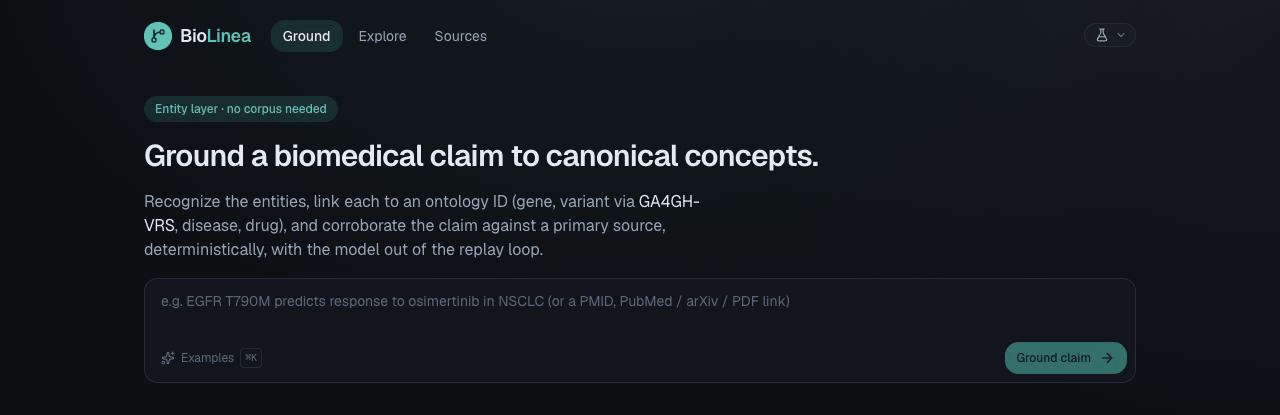
Supply chain intelligence, powered by OpenData.org.
Strata, built by BrightQuery, maps supply chain dependence on the open graph: which critical inputs the United States sources from companies in China, Brazil, the Congo, and beyond, traced through verified corporate and trade relationships.
See Strata Live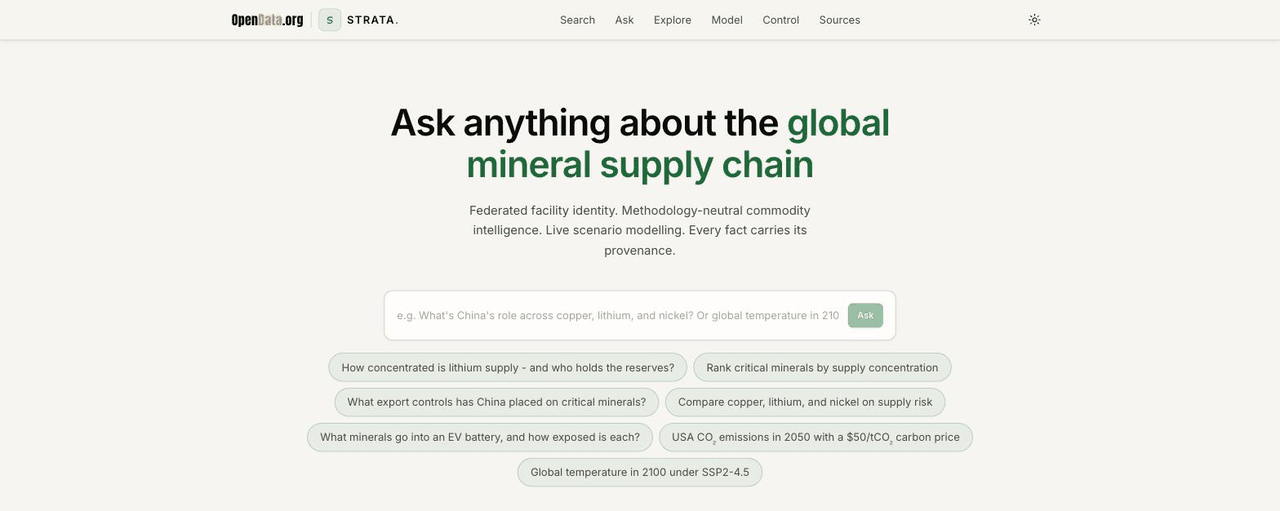
The Overture Maps connection.
A joint development effort for open, interoperable map data. Geospatial plus entity identifiers: know which company owns or operates every location, crosswalk GERS, OSM, and Placekey, and connect the physical world to the entities operating in it.